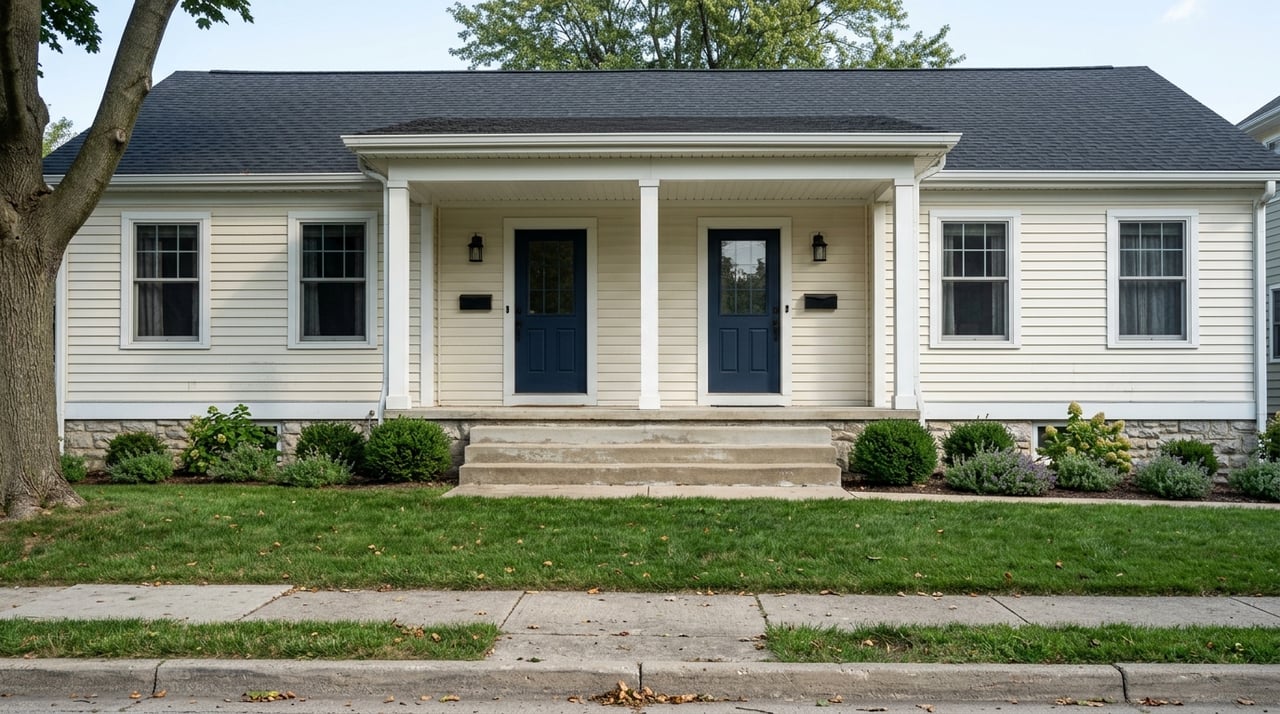
Thinking about buying a duplex, triplex, or fourplex in the Finger Lakes? It can be a smart way to build rental income, grow your portfolio, or buy a property that works for extended family living. The key is knowing that this region does not act like one single rental market, and a good deal on paper can look very different once you factor in location, operating costs, and local rules. In this guide, you’ll learn how to evaluate small multi-family opportunities in the Finger Lakes with a practical, local-first approach. Let’s dive in.
Start With Small Multi-Family Basics
If you are new to investing, the most common entry point is a duplex, triplex, or fourplex. According to Freddie Mac, one- to four-unit properties are generally treated differently from properties with five or more units.
That matters because a five-unit building is not just one more door. It often comes with a different lending process, different reserve expectations, and more operational complexity. For many first-time investors in the Finger Lakes, smaller multi-family properties offer a more manageable way to learn the numbers and the day-to-day responsibilities.
Why 2 to 4 Units Appeal
Small multi-family properties can give you multiple income streams under one roof. If one unit is vacant, the other units may still help support your monthly expenses.
They can also offer flexibility. You may be looking for a pure investment, or you may want a property that supports extended family living while still creating income potential.
Understand the Finger Lakes by Submarket
One of the biggest mistakes new investors make is treating the Finger Lakes like one rental market. In reality, it is a collection of smaller submarkets with different rent levels, ownership patterns, and deal dynamics.
For example, Census QuickFacts for Monroe County shows 341,905 housing units, a 63.7% owner-occupied rate, a median gross rent of $1,173, and a median owner value of $213,700. Rochester city is even more renter-oriented, with a 38.1% owner-occupied rate, a median gross rent of $1,081, and a median owner value of $139,600. Ontario County looks different, with a 73.7% owner-occupied rate, median gross rent of $1,150, and median owner value of $222,900.
The same pattern shows up in nearby areas. Canandaigua town data lists a median gross rent of $1,553, while nearby county medians vary widely, including Yates County at $834, Seneca County at $957, and Steuben County at $894.
What This Means for You
County-level averages are only a starting point. Before you commit to a purchase, you need to underwrite the deal at the neighborhood level, not just the county level.
A property in Rochester may have a very different renter base and operating profile than a similar-looking property in Canandaigua or elsewhere in Ontario County. That is why local context matters so much when you are comparing opportunities across the Finger Lakes.
Use Public Rent Data Conservatively
When you are trying to estimate rent, it helps to start with public data instead of guessing. A practical first step is to use Census median gross rent for broad market context, then compare it to HUD fair market rent data for the bedroom count you expect to offer.
HUD’s FY2026 Rochester MSA Fair Market Rent schedule covers Livingston, Monroe, Ontario, Orleans, and Wayne counties. The schedule lists $1,256 for a one-bedroom, $1,573 for a two-bedroom, $1,895 for a three-bedroom, and $2,083 for a four-bedroom. HUD notes that these are gross rent estimates used for voucher payment standards and other rental programs, which makes them a useful conservative benchmark.
Build a Rent Baseline
A simple way to think about it is this:
- Use Census data to understand the broader submarket
- Use HUD FMR to check bedroom-level rent assumptions
- Compare both against current listings and signed leases when available
This approach can help you avoid overestimating rent. That is especially important in a region where rents can change a lot from one county, town, or neighborhood to the next.
Check Sales, Taxes, and Property History
Rent is only one side of the equation. A property with solid income potential can still disappoint if taxes, water costs, or property issues are higher than expected.
For sales and property records, local public tools can help you do early research. The Monroe County Real Property Portal allows users to compare properties and sales, and notes that sales data can be searched three years back. Rochester also has a Recent Sales Viewer and property information resources that include assessment, property tax, and water billing data.
In Ontario County, the OnCor Parcel Snapshot through county records is referenced in the research as a useful source for property reports, maps, surveys, and tax maps, while the County Clerk serves as the official registrar of deeds, mortgages, assignments, satisfactions, judgments, and liens.
Hidden Costs That Can Change the Deal
In this region, several costs can have a big effect on cash flow:
- Property taxes
- Water and utility-related charges
- Repair and maintenance needs
- Vacancy allowance
- Management costs
- Capital reserves
- Code history and compliance issues
For Rochester properties, the city’s Property Information application and BuildingBlocks resources can be especially helpful because taxes, water billing, and code history can materially affect your bottom line.
Follow a Simple Underwriting Process
If you are just getting started, keep your process straightforward and repeatable. The goal is to test whether a property still makes sense after you apply realistic income assumptions and conservative expense planning.
A smart public-data workflow looks like this:
- Identify the submarket and property type
- Pull a rent baseline from Census and HUD
- Verify recent sales and deed history
- Estimate taxes, insurance, water, repairs, vacancy, management, and reserves
- Test the result against conservative debt service
Why Conservative Math Matters
It is easy to make a deal look good if you use best-case assumptions. It is much safer to use rent estimates that are grounded in public data and expense estimates that leave room for the unexpected.
Public portals are informational tools, not a replacement for full due diligence. Before you rely on any number, it should be cross-checked with current lease documents and official deed records.
Know the New York Rules That Affect Landlords
Before you buy, make sure you understand the legal framework that can affect how you operate the property. In New York, landlord rules can directly affect deposits, renewals, collections, and turnover timelines.
According to the New York Attorney General’s tenant guidance, security deposits are capped at one month’s rent. In buildings with six or more apartments, deposits must be held in an interest-bearing New York bank account. For non-regulated units, landlords must return the deposit within 14 days of move-out with an itemized receipt for any deductions.
Understand the Eviction Process
New York evictions are court-driven. The Attorney General states that a landlord cannot bring a nonpayment case without a 14-day written rent demand, and the state guidance explains that a lawful eviction requires a court proceeding and a judgment of possession.
That means self-help actions, such as lockouts or utility shutoffs, are not lawful substitutes for the court process. If you are building your investment plan, this should be reflected in your timelines, reserves, and screening procedures.
Follow Fair Housing Requirements
The same state guidance notes that landlords may not discriminate based on lawful source of income, including Social Security and Section 8. For you as an investor, that means your marketing, screening, and leasing practices need to stay compliant while still supporting your business goals.
This is one reason strong systems matter just as much as strong numbers. A profitable property still needs a compliant leasing approach.
Watch for Rochester-Specific Rules
If you are looking at a property in Rochester, there is another layer to understand. Good Cause Eviction is not a single statewide rule that applies the same way everywhere.
The New York Attorney General’s Good Cause Eviction guidance lists Rochester among covered localities, while the state notes that municipalities outside New York City may opt in. The guidance also says annual rent increases above 10% or 5% plus CPI, whichever is lower, are presumptively unreasonable.
Local Compliance Can Affect Your Strategy
A building in Rochester may face different renewal rules than a property in a nearby Ontario County location. That is why you should confirm local coverage and compliance requirements before you buy.
Rochester also requires a Building Owner Registry for owners of properties with buildings. The city says a revised filing is due within 10 days of any contact change or when the property is sold, and noncompliance can lead to code violations, ticketing, and fines.
Do Not Overlook Lead Paint Rules
Older housing stock is common across the Finger Lakes, so lead paint rules deserve your attention. For most pre-1978 housing, the EPA’s lead-based paint disclosure requirements require sellers, landlords, agents, and property managers to provide the EPA pamphlet, disclose known lead-based paint information, and include the required warning statement.
If you are evaluating an older duplex or triplex, this is not a minor detail. Disclosure and compliance should be part of your due diligence from the beginning.
Focus on the Right First Deal
Your first multi-family investment in the Finger Lakes does not have to be perfect. It does need to be well-researched, conservatively underwritten, and matched to the right submarket.
In practical terms, that means looking beyond headline rent numbers. You want to understand local demand, recent sales, operating costs, legal requirements, and property-specific risks before you move forward.
If you are exploring multi-family opportunities in Ontario County or anywhere in the broader Finger Lakes, working with a brokerage that understands local inventory, public records, and neighborhood-level market differences can save you time and help you make more confident decisions. When you are ready to discuss your goals, connect with Griffith Realty Group for a confidential consultation.
FAQs
What counts as a small multi-family property in the Finger Lakes?
- Small multi-family usually means a duplex, triplex, or fourplex. According to Freddie Mac, one- to four-unit properties are generally treated differently from five-plus unit buildings.
How should you estimate rent for a Finger Lakes multi-family property?
- Start with Census median gross rent for the submarket, compare it to HUD fair market rent for the expected bedroom count, and then verify those numbers against current listings and signed leases when available.
Why does submarket analysis matter for Finger Lakes investing?
- Rent levels, owner-occupancy rates, and property values vary widely across Monroe County, Rochester, Ontario County, Canandaigua, and nearby counties, so county averages alone are not enough for underwriting.
What public records can help you analyze a Finger Lakes investment property?
- You can use local tools such as the Monroe County Real Property Portal, Rochester property information resources, and county deed and parcel records to review sales, taxes, water data, and ownership history.
What New York landlord rules should new Finger Lakes investors know first?
- Key rules include the one-month security deposit cap, required deposit handling rules, court-driven eviction procedures, and protections against discrimination based on lawful source of income.
What extra rules apply to Rochester multi-family properties?
- Rochester investors should review local Good Cause Eviction coverage and comply with the city’s Building Owner Registry requirements, which include filing updates after a sale or contact change.