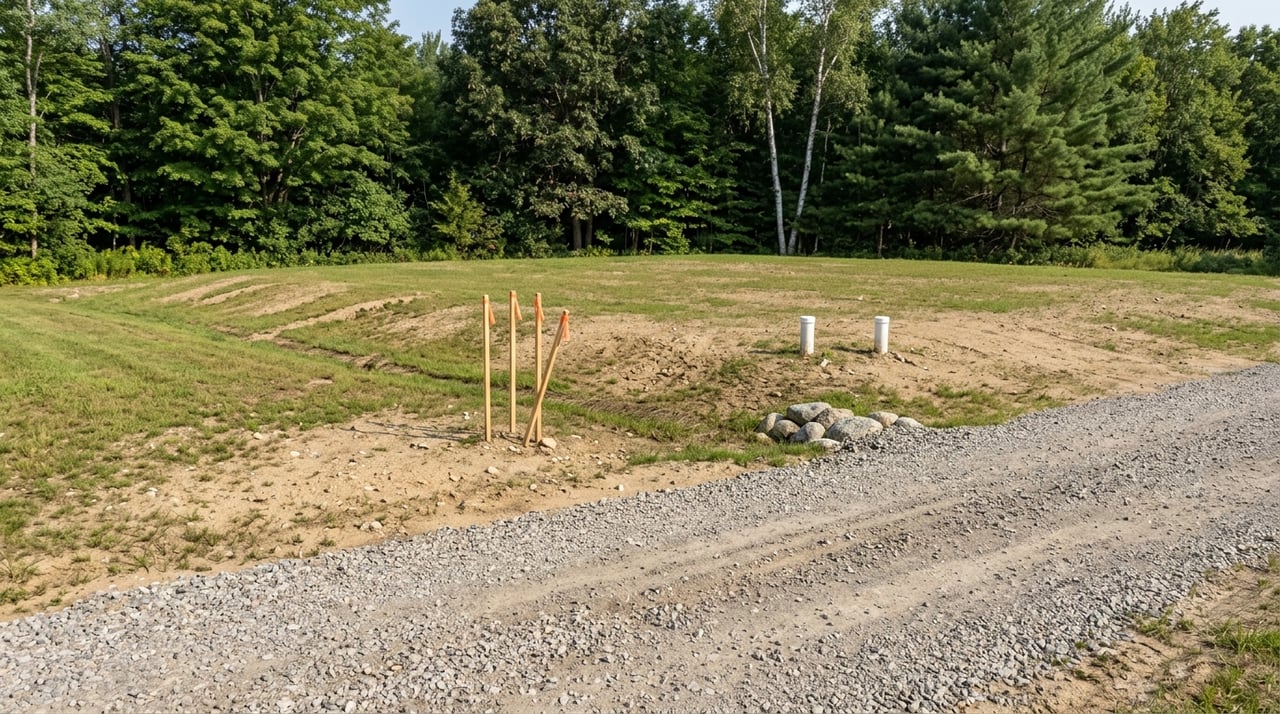
Buying land in the Finger Lakes can feel exciting right up until the big question hits: can you actually build on it? A beautiful parcel may look perfect online, but that does not always mean it can support a home, driveway, septic system, or well the way you expect. If you are hoping to buy land now and build later, a little early research can save you time, money, and stress. Let’s dive in.
Why land buying is different
Buying a finished home is usually about condition, price, and location. Buying land is also about what is possible on the site and what local rules allow.
In the Finger Lakes, that means looking closely at zoning, access, utilities, soils, and environmental factors before you move forward. A parcel may be for sale, but you still need to confirm that it can legally and practically support your future plans.
Start with zoning and local rules
Zoning in the Finger Lakes is handled town by town, not by one single countywide rulebook. That means a parcel that looks ideal in a listing could still have limits related to setbacks, frontage, lot size, subdivision rules, or overlay districts.
Ontario County offers useful map resources that include parcels, zoning, tax maps, and other spatial data. At the same time, the county says official zoning maps should always be verified with the local municipality, including the zoning office and clerk.
Why zoning matters early
Zoning affects more than whether you can build a house. It can also influence where the house can sit on the lot, how much road frontage is required, and whether the parcel can be split in the future.
If you are looking at rural land, Agricultural District status can matter too. New York’s Agricultural Districts law is designed to protect farmland and farm operations, so nearby parcels may come with different expectations than a typical residential lot.
Confirm legal access, not just map access
A parcel touching a road on a map does not automatically mean your future driveway will be simple. Legal access and physical access are related, but they are not the same thing.
In Ontario County, work in the county right-of-way requires a Highway Work Permit. That includes new driveways and utility service connections, which makes access a key part of your due diligence.
Ask practical access questions
Before you buy, it helps to ask:
- Does the parcel have clear legal access?
- Will a new driveway need county approval?
- Will utility connections require work in the right-of-way?
- Is the building site easy to reach with normal construction equipment?
These questions can shape both your timeline and your budget.
Check sewer, septic, and wastewater options
For many land buyers, septic feasibility becomes the make-or-break issue. In some parts of Ontario County, parcels may be served by county sewer districts. The county notes, for example, that the Canandaigua Lake district serves Canandaigua, Gorham, and Hopewell, while the Route 332 extension serves the Town of Canandaigua.
If the parcel is outside sewer service, you will likely need a private septic plan. That is where site conditions become very important.
Why septic feasibility matters so much
New York Department of Health Appendix 75-A applies to residential onsite wastewater systems serving less than 1,000 gallons per day. The rules also allow alternative subsurface systems when a site cannot support a conventional system, with designs reviewed by the health department that has jurisdiction.
In plain terms, slope, groundwater, bedrock, and usable soil can affect whether the lot is buildable and how much the system may cost. A parcel that seems affordable at first can become much more expensive if wastewater design is complicated.
Do not assume a private well is simple
If a parcel does not have public water, the well becomes part of your buying decision. Ontario County states that private wells are the owner’s responsibility, so it is important to budget for both testing and possible future work.
New York State Department of Health recommends annual bacteria testing for private wells and retesting for other contaminants every three to five years through an ELAP-certified laboratory. The state also advises testing after flooding, after well work, or when the water changes in taste, smell, or appearance.
What this means for buyers
If you are buying raw land for a future home, plan ahead for:
- Well drilling costs
- Water testing
- Possible treatment equipment
- Ongoing maintenance as a homeowner
It is much better to think through these costs before closing than after construction planning begins.
Look closely at soils, wetlands, and flood risk
Not every challenge is visible from the road. Some of the biggest issues with vacant land are hidden in the soil or tied to environmental constraints.
USDA NRCS identifies Web Soil Survey as the authoritative source for soil survey information, and it can help buyers, builders, and developers evaluate land suitability and possible hazards. County GIS layers are also helpful for checking parcel boundaries and map features, but site-specific conditions still need an onsite review.
Wetlands and floodplains can affect your plans
New York State Department of Environmental Conservation regulates freshwater wetlands and adjacent areas. Its program identifies buildings, roadways, septic systems, fill, excavation, grading, drainage, and similar activities as examples of regulated work.
Flood risk also deserves attention early in the process. Flood maps can change over time, so checking them before you finalize your design is important.
Stormwater can also affect construction
If your future build disturbs one acre or more of soil, New York State Department of Environmental Conservation requires Construction General Permit coverage and a Stormwater Pollution Prevention Plan. That may not affect every homesite, but it is worth understanding if you are planning a larger build footprint or site work.
Know when environmental review may apply
Some land purchases involve more than a simple building permit. If your project needs a discretionary approval, such as a subdivision or another local permit, New York’s SEQR process may apply.
That process requires the reviewing agency to consider environmental impacts. For buyers, the takeaway is simple: the earlier you investigate potential issues, the better.
Understand land financing before you shop too far
Financing land is not always the same as financing a finished home. Many mainstream mortgage products are tied to an existing dwelling or a construction package rather than an unimproved parcel.
That is why it is smart to speak with a lender early and ask specifically about land-only financing, lot loans, cash purchase options, or construction-to-permanent financing.
What to know about future build financing
USDA’s Section 502 Guaranteed Loan Program is intended for eligible low- and moderate-income households buying, building, rehabilitating, improving, or relocating a dwelling in an eligible rural area. Eligible funds can include a site with a dwelling and site preparation costs such as grading and driveways.
Fannie Mae also outlines single-closing construction-to-permanent financing, where the loan can cover both construction and the permanent mortgage in one closing. In that structure, the lot may be purchased as part of the construction transaction or refinanced if the borrower already owns it.
The practical takeaway is that raw land often needs a different financing strategy than a standard home purchase. Your preapproval should fit your actual plan and timeline.
A smart due diligence checklist
When you are buying land in the Finger Lakes for a future home, these steps can help you move forward with more confidence:
- Review the parcel in county GIS and compare the tax map, zoning map, aerial image, and available contour data.
- Confirm zoning, setbacks, frontage, and any overlay or agricultural district issues with the town or village office.
- Verify whether the parcel can connect to sewer or will need an onsite septic system.
- Ask for a septic feasibility opinion early if public sewer is not available.
- If the property will rely on a private well, budget for testing and potential drilling or treatment costs.
- Check wetlands, floodplain information, and possible stormwater triggers before closing.
- Talk with your lender about products that fit a future build, not just a standard home purchase.
Why local guidance matters
Land purchases usually involve more moving parts than buyers expect. The right parcel is not just about scenery, acreage, or price. It is about whether the land fits your long-term goals and whether the path to building is clear.
That is where local experience can make a real difference. With so many town-specific rules and site-specific questions across the Finger Lakes, having a local brokerage help you evaluate parcels can make the process much more manageable.
If you are exploring land in the Finger Lakes and want practical guidance on what to look for before you buy, reach out to Griffith Realty Group for a confidential consultation.
FAQs
What should you check before buying land in the Finger Lakes?
- You should confirm zoning, setbacks, frontage, legal access, sewer or septic options, private well needs, wetlands, flood risk, and financing that matches a future build.
How does zoning affect Finger Lakes land purchases?
- Zoning can limit how a parcel is used and may control lot size, setbacks, road frontage, subdivision options, and other development standards, so it should be verified with the local municipality.
Can every Finger Lakes land parcel support a septic system?
- No. Septic feasibility depends on conditions such as slope, groundwater, bedrock, and soil, and some sites may require an alternative system or may be more costly to develop.
Do you need to verify road access for Finger Lakes land?
- Yes. Legal access should be confirmed, and in Ontario County, new driveway work or utility connections in the county right-of-way require a Highway Work Permit.
Is financing land in the Finger Lakes different from financing a house?
- Yes. Raw land often needs a different financing structure than a standard mortgage, so you should ask lenders about lot loans, cash options, or construction-to-permanent financing early in the process.
Why do wetlands and floodplains matter when buying Finger Lakes land?
- Wetlands and flood risk can affect where and how you build, and certain activities in regulated wetland areas may require additional review or design changes.